



The race to shrink the astronaut gym before Mars
Two compact exercise machines, one British and one European, are competing to replace the 1,800 kg ISS workout suite. Neither has a guaranteed seat on the next deep-space mission.

A British inventor's compact exercise rig and a European resistance machine the size of a filing cabinet are heading into the same narrow opening: the small, weight-starved corner of any spacecraft NASA, ESA or a commercial operator sends beyond low Earth orbit. Both promise to keep astronauts' bones and muscles intact on multi-year missions. Only one has a confirmed launch.
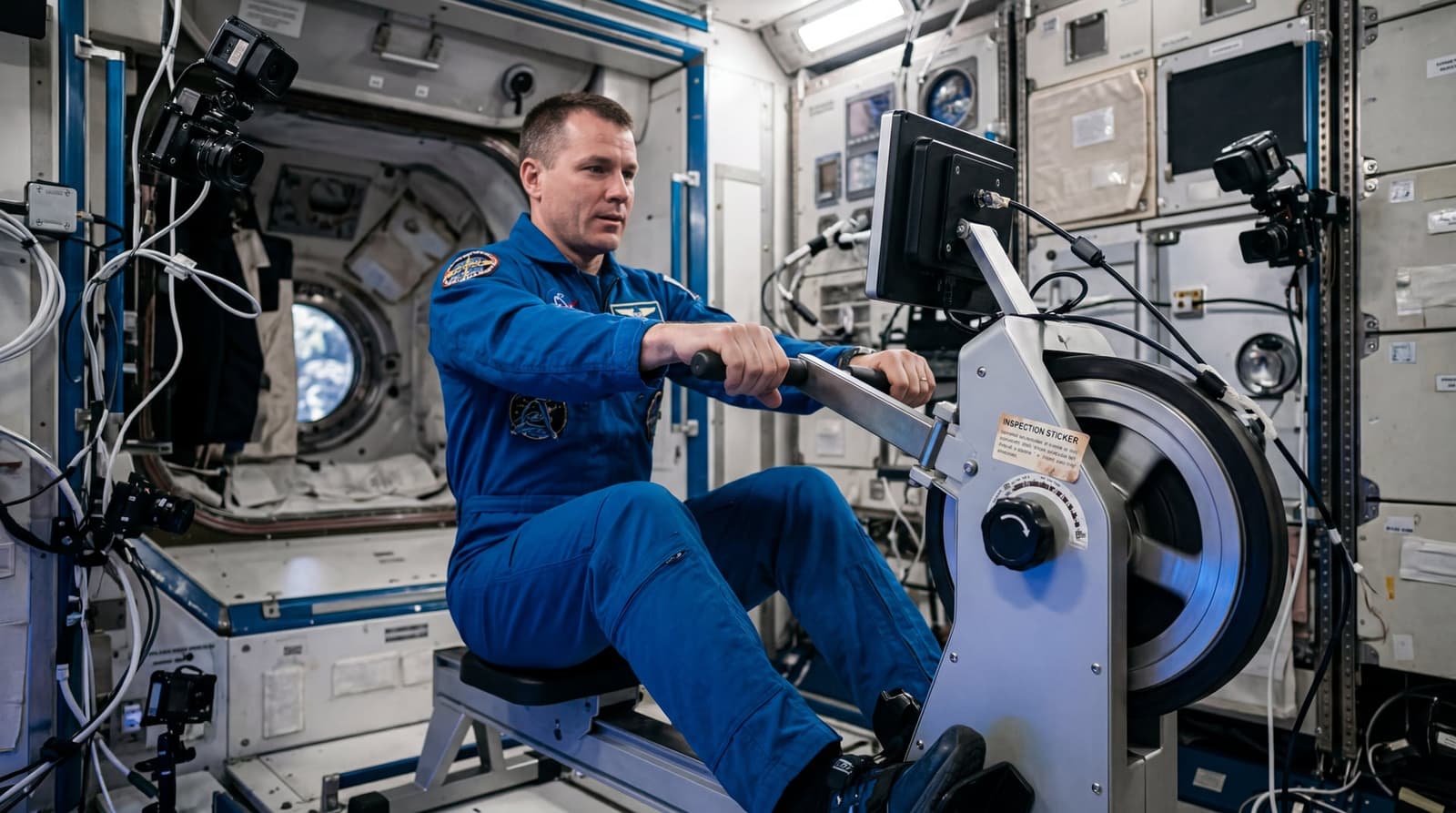
ESA's European Enhanced Exploration Exercise Device (E4D), built by Denmark's Danish Aerospace Company with motion-capture from Sweden's Qinematic, was due to arrive at the International Space Station in April 2026 aboard the εpsilon mission of French ESA astronaut Sophie Adenot, ESA said in January. The UK-built HIFIm, short for High-Frequency Impulse for Microgravity, has cleared parabolic flight trials but has no ISS slot, according to the BBC.
The stakes are physiological and unforgiving. Astronauts lose roughly 1% of bone density each month in orbit, about twelve times the rate of an average elderly person on Earth, the Canadian Space Agency reports. The current ISS workout suite, the ARED resistance rig, the T2 treadmill and the CEVIS bike, weighs more than 1,800 kg and fills almost 80 square metres. None of that fits inside Orion, a lunar lander, or a Mars transit vehicle.
A procurement race, not a science fair
Most coverage of compact space gyms reads as a feel-good engineering yarn. The procurement reality is harsher. NASA has effectively sidelined the Gateway lunar station that originally anchored the business case for both HIFIm and E4D, leaving developers to chase Artemis hardware slots, commercial station contracts, and whatever Mars-class vehicle eventually emerges.
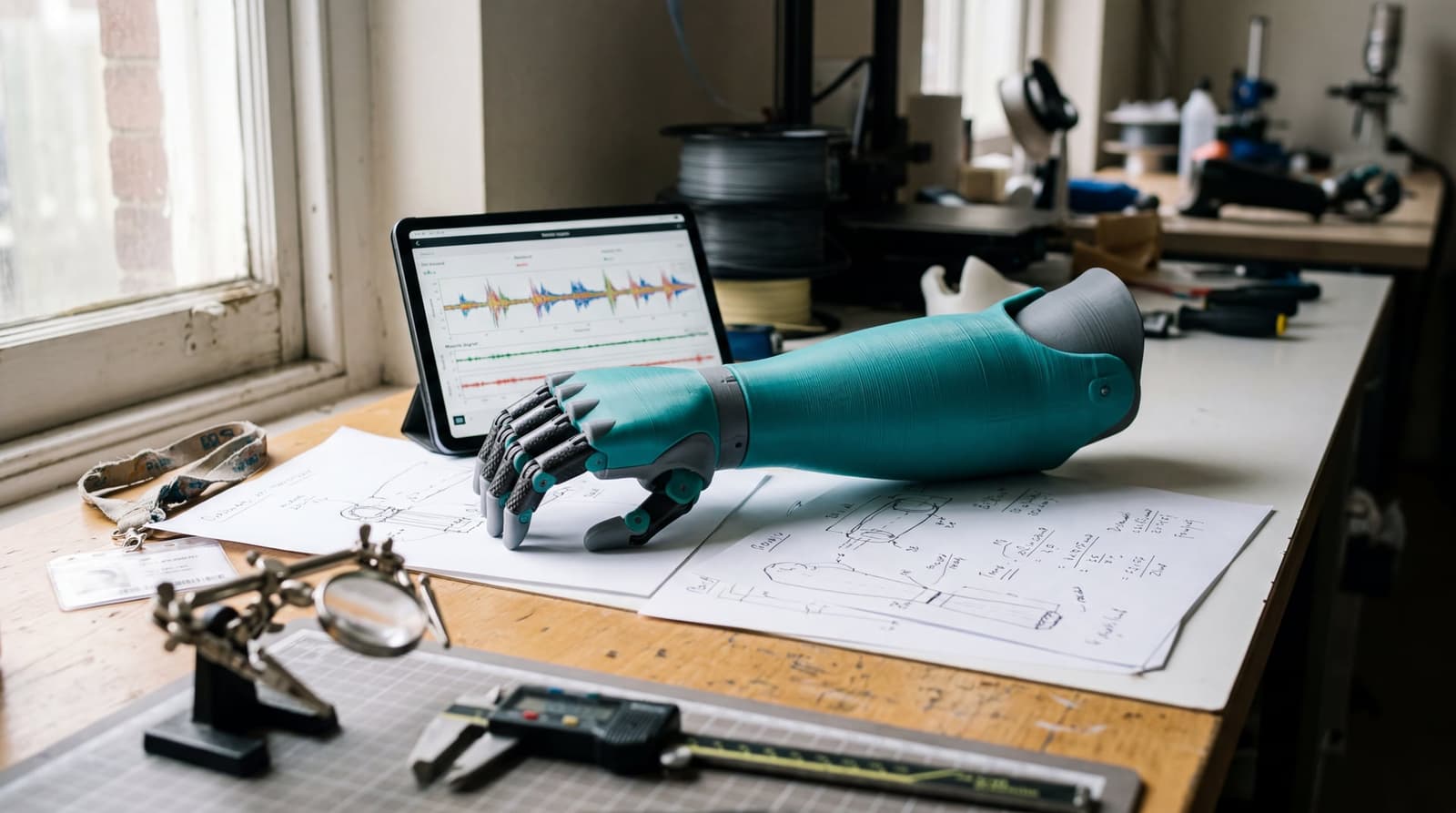
HIFIm was conceived for a European competition to equip Gateway. Its inventor, John Kennett, a former British Airways aerospace engineer who now runs a Pilates studio in London, claims the device covers 300 exercises, needs no electrical power, and could cut astronaut workout time from two hours a day to thirty minutes, the BBC reported. Those numbers are developer claims, not peer-reviewed results.
Christian, speaking to the BBC, framed time as the scarce resource. Two hours a day of mandatory exercise, six or seven days a week, is roughly an eighth of an astronaut's waking shift. On a three-year Mars round trip, that is months of crew time locked to a piston and a flywheel.
The inconvenient science
The deeper problem is that the existing protocol does not always work. A 2023 study in npj Microgravity, based on 46 astronauts averaging 178 days in orbit, found that roughly 600 minutes a week of aerobic and resistance training did not fully protect against multi-system deconditioning. NASA's own modeling suggests up to 17% of astronauts could suffer performance-limiting decline if current countermeasures are carried, unchanged, into deep space.
That is the gap E4D and HIFIm are trying to close. ESA's machine combines resistive training, cycling, rowing and rope pulling in one frame, supporting more than 30 exercises with loads up to 270 kg, the agency said. A camera-based motion capture system lets crew correct their own posture in real time.
"E4D is a gamechanger for astronaut health. By enabling a broader and more adaptable range of resistance exercises, it supports the preservation of muscle mass and bone integrity in microgravity, which are two of the biggest physiological challenges during long-duration missions."
Tobias Weber, ESA Principal Investigator for E4D
ESA Operations Team Lead Jennifer Struble said the on-board feedback system "reduces reliance on ground supervision and helps ensure that every training session remains safe, precise and effective, even in the demanding environment of orbit," according to the agency's January release.
Adenot, who will commission the device on station, said she was "excited to try the new workouts made possible in space thanks to this European technology," ESA reported.
What HIFIm still has to prove
Kennett's device has institutional backing, including parabolic flight testing supported by ESA and funding from the UK Space Agency, with additional input from NASA and the Canadian Space Agency, per the BBC. The principal investigator on the HIFIm experiment is Dr Dan Cleather, a strength and conditioning professor at St Mary's University in Twickenham.
The human test pilot has been Matt Wells, the British rower who won bronze at the 2008 Beijing Olympics. "John and team has created a machine which mimics rowing so well that you are rewarded for having effective technique, which is just like any leading brand rowing machine at 1G," Wells said in remarks posted by Kennett.
What HIFIm lacks is a manifested flight. E4D has a launch vehicle, a deployment astronaut, and a station to live on. HIFIm has a prototype, a parabolic flight pedigree, and a pitch to whichever Artemis or commercial-station operator will take it.
Treadmills, EMS and the Mars clock
NASA is also hedging. The agency's Crew-10 mission is running a "Zero T2" study to measure what happens when astronauts train without a treadmill, since the T2 is considered too heavy and bulky for Mars-class vehicles, NASA said. In 2025, ISS astronauts Nichole Ayers and Anne McClain ran electrical muscle stimulation trials, per a NASA blog post, exploring whether targeted electrical pulses can supplement or partly replace traditional exercise.
The Artemis II mission carried a flywheel weighing just 14 kg, smaller than a carry-on suitcase, the Canadian Space Agency notes. That is the mass budget E4D, HIFIm and any future device must approach.
NASA astronaut Matthew Dominick, who commanded Crew-8 in 2024, put the engineering constraint bluntly. "A treadmill takes up a lot of mass, space, and energy," he said in NASA materials. "This is not great for missions to Mars where every kilogram counts."
The physiological deadline is not negotiable. A crew that lands on Mars after a six- to nine-month transit needs to walk, lift, and work within hours of touchdown, on a surface with no ground crew and no medevac. The question facing space agencies is not whether a compact gym is necessary. It is which one, and whether the device that wins the contract will actually keep astronauts on their feet when they arrive.
Related stories
Northern Ireland's rarest rainforest gets a 100-year reboot in Tyrone
Ulster Wildlife has planted nearly 30,000 native trees at Lenamore Wood, the first Northern Irish site in Aviva's £38.9m Celtic Rainforest programme. The genetic detail matters more than the photo op.
Four Jersey beaches flunk bacteria tests as island bakes in record May heat
Officials blame rainfall runoff for 'poor' water quality at Plemont, Grouville, Havre des Pas and Victoria Pool, even as Jersey breaks its all-time May temperature record.
SpaceX's Starship V3 ends in planned Indian Ocean fireball, two days after $80B IPO filing
Flight 12 broke a seven-month launch drought and delivered most of its test goals. The timing, just 48 hours after SpaceX's S-1 hit the SEC, gave the spectacle a second audience: Wall Street.
Somerset's fox count just doubled in 10 days. That's a problem.
A county citizen science project logged more red foxes in a week and a half than official records typically capture in two years, exposing a structural blind spot in how Britain monitors its most familiar wildlife.
Keep Reading
Assyrian Christian Among 85,000 Prisoners Released in Iran Amid Coronavirus Pandemic

UK's River Wye gets a rights charter. Will polluters notice?

Rare four-chick osprey brood hatches in Dorset as southern England recolonisation accelerates

Six eggs used to cost £1. Here's why they're now £2.

In Cambridge, a paycheck no longer keeps workers out of the food bank