



Atlanta Residents Cheer AI Productivity, Fear the Job Cuts It Brings
A new Atlanta Regional Commission snapshot finds 61% of metro residents expect AI to boost productivity, but 73% expect it to shrink the job pool, just as city hall reviews live AI deployments.


Metro Atlantans think artificial intelligence will make them more productive. They also think it will take their jobs.
That is the split that emerges from a Regional Snapshot published this month by the Atlanta Regional Commission, the official planning agency for the 11-county Atlanta region, which titled the piece around OutKast's 1996 coinage 'ATLiens' to ask whether the region comes in peace with AI. The snapshot draws on the 2025 Metro Atlanta Speaks survey, released October 24, in which 4,121 adult residents weighed in on what AI will do to their work, their lives, and their paychecks. The numbers are sharper than anything ARC has published before on the subject, and they land while the City of Atlanta is actively reviewing AI tools that automate work its employees do today.
Across the 11 counties, 61% of respondents said AI will increase productivity and 49% said it will make life easier, according to ARC. But 73% said AI will decrease the number of available jobs. In Cherokee County, the jobs pessimism climbed to 76%, the Tribune Ledger reported.
The survey was administered by Kennesaw State University's A.L. Burruss Institute of Public Service and Research, with a regional margin of error of plus or minus 1.5 percentage points.
A sharper question than last year
This is the second year ARC has asked about AI, and the framing has moved fast. The 2024 survey posed a single abstract question about AI's effect on society; 42% called it 'mostly negative,' 30% 'more balanced,' and 22% 'mostly positive,' Rough Draft Atlanta reported at the time.
The 2025 instrument disaggregates that mood into three concrete domains: productivity, quality of life, and jobs. The result is a more useful planning signal. Residents are willing to credit AI with workplace gains. They are not willing to assume those gains will accrue to them.
That gap, 61% productivity optimism against 73% jobs pessimism, is the data point ARC is putting in front of member jurisdictions, state agencies, and the regional business community. It sits alongside housing affordability, which 28% of respondents named the region's top problem, overtaking traffic at 24%, WSB-TV reported.
"On this year's survey, the concerns over housing affordability came through loud and clear," Mayor Andre Dickens, who chairs ARC, said in remarks at the State of the Region event.
ARC CEO Anna Roach framed the broader brief more carefully. "Tackling tomorrow's challenges will require a spirit of ingenuity. A tolerance for risk. The ability to shift and be nimble," she said.
The city is already automating
The survey lands as Atlanta's own AI governance work moves into its decisive phase. In December 2024, the Atlanta City Council voted unanimously to establish a 13-member Artificial Intelligence Commission, with a final report due February 2026, Smart Cities Dive reported. The commission is chaired by District 2 Councilmember Amir Farokhi and held its first meeting in May 2025.
By October, members were reviewing specific deployments. At the commission's October 8 meeting, Atlanta CIO Jason Sankey and IT Director Natalie Hall briefed members on tools already in use, including a system that summarizes police body-camera audio and vehicle-mounted cameras that identify potholes, the Center for Civic Innovation reported.
Both of those tools automate tasks that city employees do today. Officers write reports. Public works crews inspect pavement. The ARC survey suggests residents understand exactly that pattern, even if they have not seen the slide deck.
Farokhi has been candid about the fiscal pressure pushing the city in this direction. "AI could be used to streamline administrative tasks and improve customer service at a time when we need to tighten our belts," he told Government Technology. The city is working through a roughly $33 million budget gap.
The president of Atlanta's PACE union has publicly asked for written job protections tied to any AI rollout. The commission has not yet answered that ask.
A regional planning input, not a vibe
What is new is less the sentiment than the standing ARC is giving it. The agency has been building AI capacity quietly since 2023 through its Emerging Technologies Roundtable, which has published an AI Policy and Regulation Primer, a guide to developing model code with generative AI, and internal staff guidance for ARC employees. Georgia runs parallel infrastructure at the state level through the Office of Artificial Intelligence and the Horizons Innovation Lab in Atlanta.
By publishing the Snapshot, ARC is treating resident anxiety about AI-driven job loss as a planning variable on the same shelf as commute times and rent burdens. That has practical implications for how member jurisdictions write procurement language, workforce development grants, and ethics policies over the next budget cycle.
Stefaan Verhulst, co-founder of GovLab, told Government Technology that the local layer is where this work has to happen. "Cities are well-positioned to address the challenges and opportunities of AI due to their proximity to local stakeholders and the specific needs of their communities," he said.
For Farokhi, the stakes are personal as much as procedural. "This issue is important to me because AI has power, both good and bad, to transform our lives," he said when the commission was established.
The commission's report is due in February. Metro Atlanta Speaks will run again next fall. Between those two dates, the city will keep deploying tools, and residents will keep telling pollsters they are nervous about what comes next.
Related stories
Bionic arms for five-year-olds, a third thumb, and the 90% who get nothing
A BBC Tech Life episode showcases the bleeding edge of prosthetics. The harder story is who can actually use any of it.
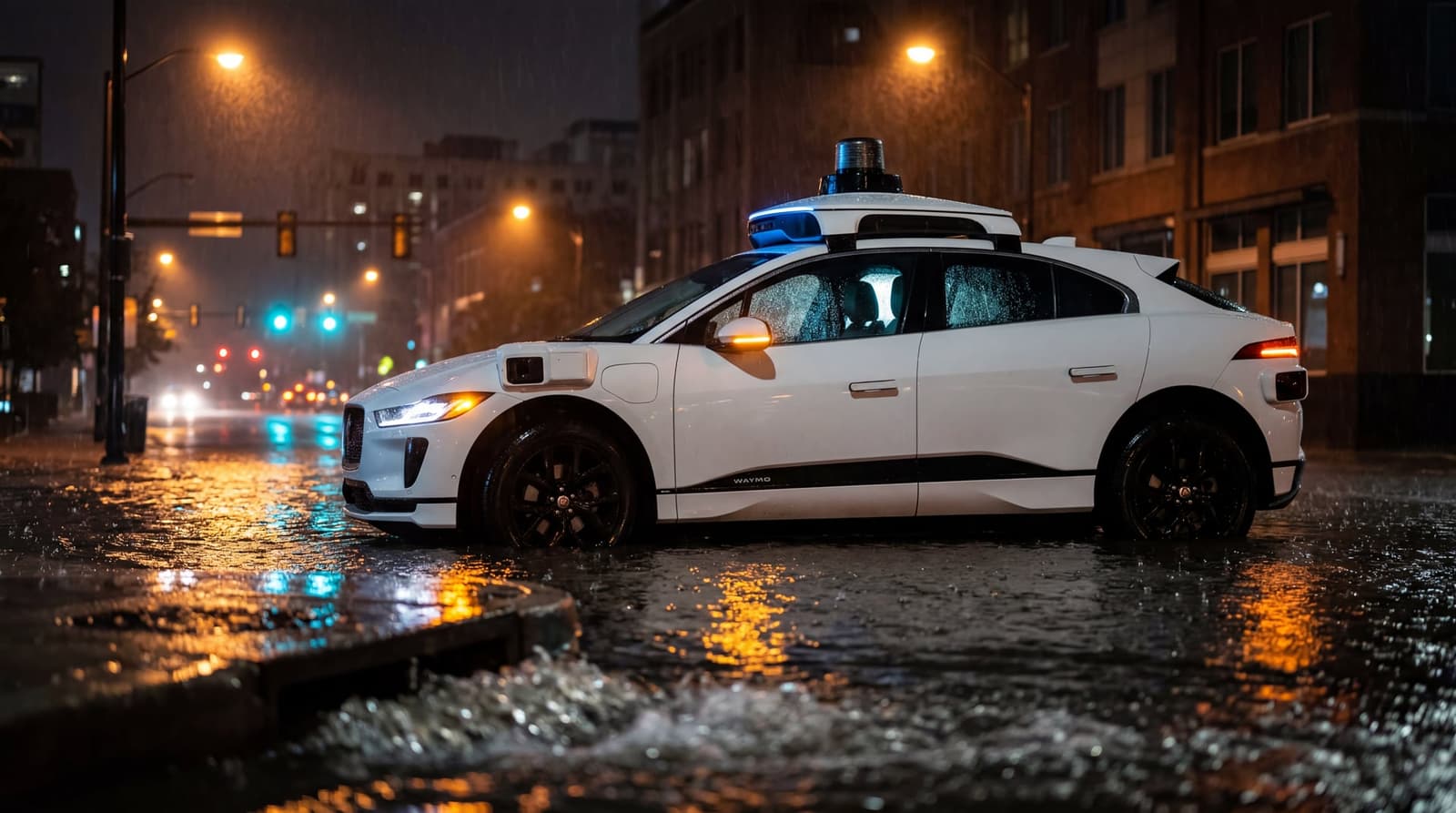
Waymo Halts Robotaxis in 5 Cities as Flood Patch Fails in Atlanta
A software stopgap pushed to all 3,791 Waymo vehicles depended on National Weather Service alerts that arrived too late. The same day, Waymo also pulled every freeway route in the US.
Newsom's AI Workforce Order Buys Time as Layoffs Mount
California's governor ordered agencies to study AI's disruption to workers. Labor leaders say studying isn't action, and a tougher bill already sits on his desk.
SpaceX scrubs Starship V3 debut a day after filing $1.75T IPO
A hydraulic pin halted Flight 12 at T-40 seconds. The S-1 filed hours earlier names Starship as the prospectus's top risk.
Keep Reading
Assyrian Christian Among 85,000 Prisoners Released in Iran Amid Coronavirus Pandemic

Northern Ireland's rarest rainforest gets a 100-year reboot in Tyrone

Four Jersey beaches flunk bacteria tests as island bakes in record May heat

Six eggs used to cost £1. Here's why they're now £2.
In Cambridge, a paycheck no longer keeps workers out of the food bank