


York sixth-formers built a prom-dress shop. Their school's business class tripled.
Dress2Impress at Huntington School is opening a permanent on-site store next to a curriculum experiment: social enterprise as graded coursework. Applied Business enrolment has jumped from 7 to 26.

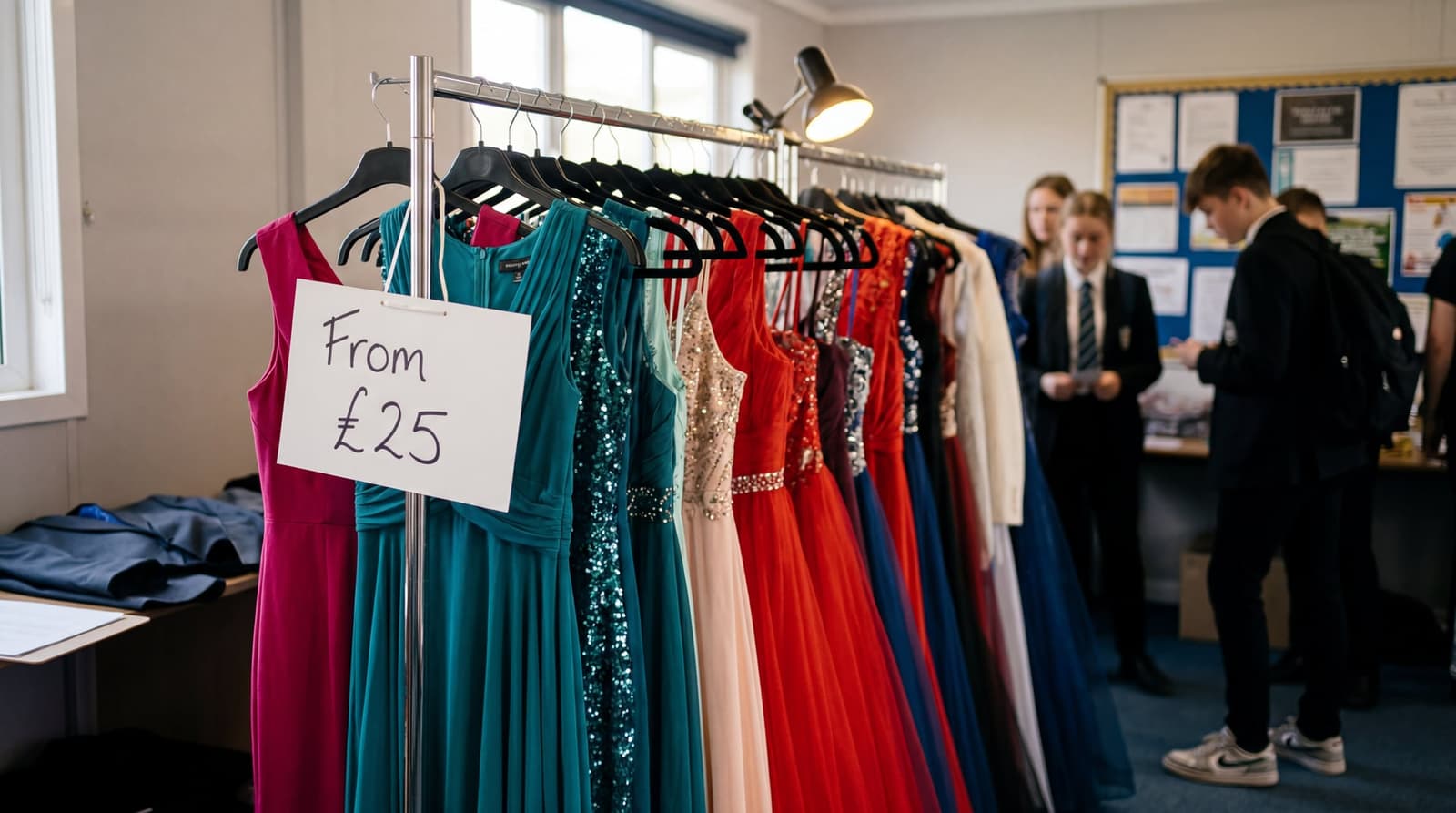
A group of teenagers in York have done what no DfE policy line has managed: built a working piece of affordability infrastructure for school prom, and turned it into a graded business qualification at the same time.
Dress2Impress, a pupil-run social enterprise at Huntington School in York, is opening a permanent shop in a refitted Portacabin on the school grounds, selling and renting donated prom outfits from £25. Pupils on Free School Meals borrow for free. The team, now 40-strong, has been backed by donations from prom labels including Sherri Hill, Hermione and Mascara, with suits supplied by Moss Bros, Next and M&S, according to teacher Rianne Hughes (Gazette & Herald).
The project, which began in 2024 as a Year 12 Applied Business coursework idea, won the Best Community Project prize at The Press York Community Pride Awards 2025. It has also been picked up by the BBC and local outlets as a feel-good education story. The more interesting part is what it has done to the business classroom itself.
A curriculum experiment hiding in a Portacabin
Huntington's Applied Business cohort has grown from 7 pupils in 2024/25 to 26 in 2025/26, a near-quadrupling the school's Research School arm attributes directly to the project's profile, according to a case study it published in November.
That's the policy story most coverage has skipped. Dress2Impress is not a charity drive bolted onto a school. It is a credentialed piece of coursework where pupils run a live retail operation, with pricing decisions, inventory, supplier outreach and a P&L that funded the Portacabin fit-out from the proceeds of a single fair.
The inaugural Prom Fair in March 2025 loaned out 52 outfits, roughly a fifth of the Year 11 cohort, at £30 to £50 a hire. Profits paid for the permanent shop. Bookings are already open for the 2026 prom, plus weddings and interview wear, and the shop will run a pay-as-you-feel pre-loved school uniform service alongside the formalwear.
"This is a brilliant social enterprise and the money they make goes straight back into enhancing the service further," Hughes told the Gazette & Herald.
The cost stack the project is attacking
UK prom spending has drifted upward for two decades. Sustainable-prom retailer Happyprom puts the current average at around £400 for girls and £240 for boys, with dresses alone ranging from £50 to £1,000, according to its February 2025 breakdown. The Dress2Impress team's own market research, published on its project site, found respondents reporting an average £500 spend for girls and £250 for boys, with some paying up to £1,000.
The number that drives the environmental case is sharper: only 13.7% of those surveyed said they were likely to re-wear their prom dress.
"You get these big sparkly dresses that are awful for the environment," said Esther Edwards, a Year 13 co-founder. "Dress2Impress gives them another use and means they are not sitting in landfill."
The waste figures back her up. UK households send around 300,000 tonnes of used clothing to landfill or incineration each year, more per person than any other European country, according to Keep Britain Tidy. WRAP's 2024 Textiles Market Situation Report found UK consumers put 49% of unwanted textiles straight into general waste, equivalent to about 35 items per person per year.
We're all buying too many new items and then putting too many clothes in the waste-bin consigning them to landfill or incineration. These are valuable resources, not waste.
Harriet Lamb, CEO, WRAP
The dignity argument
Hughes has been blunt about the social side, which schools usually avoid discussing in public. "It's a thing that doesn't get talked about enough, there's a social stigma to being able to afford things for prom," she told the Gazette & Herald in 2024 when the project first launched.
Pupil Premium funding, the DfE's main lever for low-income pupils, does not earmark money for leavers' events. Schools that want to underwrite prom costs do it informally, often through pastoral budgets or hardship funds. Dress2Impress routes free hires through pastoral referral, which keeps the transaction discreet.
Co-founder Carlota White Gonzalez, also in Year 13, framed the point in commercial terms. "This is important because everyone needs to feel equal and good," she said. "When you pay the big price tag, you are also paying for the experience, but here, you get the experience without the price tag."
Edwards put the access argument more simply: "We want to make prom much more accessible and affordable for students in school. Often it can be quite a challenge for families."
A replicable model, if anyone copies it
What makes Huntington's set-up unusual is not the rail of donated dresses. Charity shops, pop-up sustainable prom events and rental platforms have been chasing the same problem for years. The unusual part is the structure:
- The enterprise sits inside a graded Applied Business course, not extracurricular volunteering.
- Profits fund capital investment in the school estate, in this case the Portacabin fit-out.
- Free access for FSM pupils is built into the pricing model from day one, not bolted on.
- The shop is diversifying into weddings, interview wear and pre-loved uniform, broadening the year-round revenue base.
That combination, social enterprise as coursework rather than simulation, is what the school's Research School is now studying as a case study in "fashioning belonging" for disadvantaged pupils. The early evidence is the enrolment number. Twenty-six pupils chose Applied Business this year, up from seven, in a subject that competes against more conventional A-level options.
The Year 13 leads, Edwards, White Gonzalez and Matteo Cupaiolo, who collected the York Community Pride award, will leave school next summer. The cohort behind them is now nearly four times the size of the one that started the project. Whether other state secondaries pick up the template is the question. The pupils have already shown the unit economics work.
Related stories
Six eggs used to cost £1. Here's why they're now £2.
UK egg prices have doubled in four years despite record production. The real story isn't greedflation, it's how prices move down much slower than they move up.
In Cambridge, a paycheck no longer keeps workers out of the food bank
The UK's most unequal city is now feeding employed residents through subsidised food clubs, raising questions about whether wages or housing will ever catch up.
UK spends £25 on youth benefits for every £1 on jobs help, Milburn finds
The former Labour health secretary's interim NEET review lands on a government still bruised by last summer's welfare rebellion, and questions whether spending more on job schemes can fix a crisis now driven by mental…
Why your ice cream costs $6.49: a coconut, cocoa and corporate crisis
A record-hot summer pushed American ice cream prices to all-time highs. The deeper story runs through Philippine biodiesel mandates, West African droughts, and the breakup of the world's biggest ice cream company.
Keep Reading
Assyrian Christian Among 85,000 Prisoners Released in Iran Amid Coronavirus Pandemic

Northern Ireland's rarest rainforest gets a 100-year reboot in Tyrone
Four Jersey beaches flunk bacteria tests as island bakes in record May heat
Bionic arms for five-year-olds, a third thumb, and the 90% who get nothing
Frasers rebrands Castleford outlet 'Leeds'. The real story is a credit product.