





EasyJet's 'don't panic' summer rests on a 72% hedge and a Russian fuel workaround
CEO Kenton Jarvis says there are no jet fuel shortages at any EasyJet airport. The same week, the UK quietly reopened the door to Russian-refined fuel.

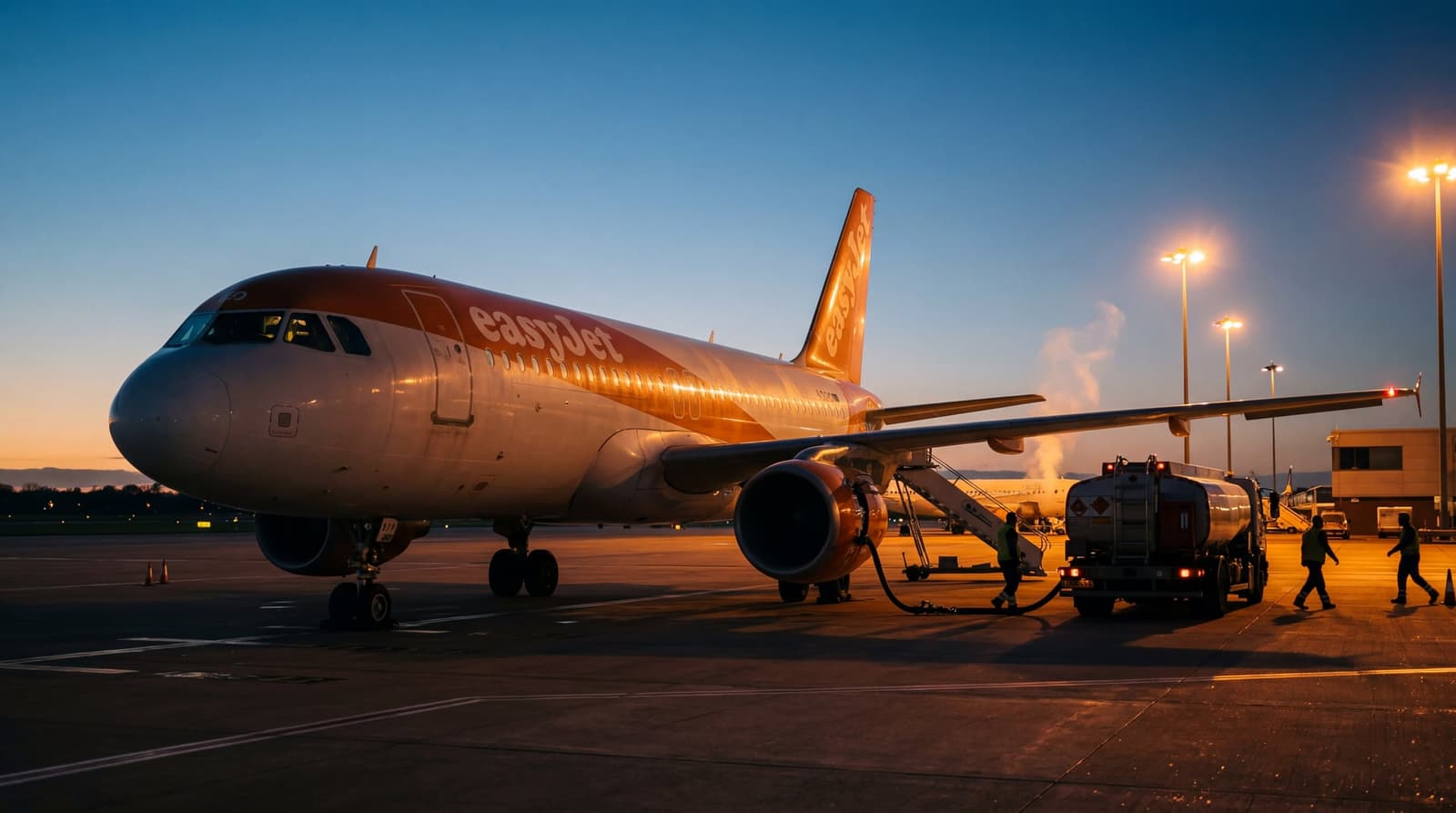
EasyJet Chief Executive Kenton Jarvis told holidaymakers on Friday not to worry about jet fuel running short this summer, even as the airline posted a widened half-year loss and European fuel prices traded at roughly double their pre-war level.
"We've seen absolutely no issues with fuel supply in any of our airports in the UK across Europe or indeed beyond," Jarvis told BBC Radio 4's Today programme (BBC). He urged customers to book with confidence and said late demand for same-month departures remained strong.
The reassurance landed with awkward timing. A day earlier, the UK government brought into force General Trade Licence GBSAN0004, which permits indefinite imports of diesel and jet fuel refined in third countries from Russian-origin crude, a partial reversal of the October 2025 ban (Trade Compliance Resource Hub). Ministers cited the need to protect domestic fuel supply.
A loss in line with guidance, and a warning on the half ahead
EasyJet reported a pre-tax loss of £552m for the six months to March, widening from £401m a year earlier and landing inside its April guidance range of £540m to £560m. Revenue rose 12% to £3.95bn and passengers grew 6%, but the loss after tax climbed 27% to £377m, according to the carrier's interim results (Euronews).
The Iran war alone added about £25m to EasyJet's fuel bill in March, the company said. Jet fuel prices have "literally doubled" from roughly $700 to $1,400 per metric tonne since the conflict began on 28 February, Jarvis told LBC's Nick Ferrari (LBC).
The airline's defence rests largely on its hedge book.
Kenton Jarvis, EasyJet CEO
That hedge is doing real work. It means roughly seven in ten litres EasyJet burns this summer were locked in before the Strait of Hormuz closed. The remaining 28% is exposed to a spot market trading near $1,400 a tonne, and the hedge does not extend indefinitely into the winter season.
The contradiction beneath the calm
Jarvis's message of plentiful fuel sits uneasily next to the warnings coming from energy officials and the government's own policy moves.
In mid-April, International Energy Agency Executive Director Fatih Birol told reporters that Europe had "maybe six weeks" of jet fuel left and called the situation "the largest energy crisis we have ever faced" (Euronews). Stocks at the Amsterdam-Rotterdam-Antwerp refinery hub fell to a six-year low. Airports Council International Europe wrote to the European Commission warning of a "systemic" shortage if Gulf flows did not resume.
Flows have not resumed. What changed is the supply route. The US extended sanctions waivers on 18 May, and the UK followed with GBSAN0004 two days later. European refiners can now legally process Russian-origin crude through Indian or Turkish intermediaries and ship the resulting jet fuel into UK and EU airports. The Middle East historically supplied around 75% of Europe's net jet fuel imports; the Russian-crude workaround is the most plausible explanation for why kerosene is still arriving at Gatwick and Luton on schedule.
UK Trade Minister Sir Chris Bryant has apologised for the "clumsy" rollout of the licence. Conservative leader Kemi Badenoch called the move "insane." Prime Minister Sir Keir Starmer has defended it on supply-security grounds.
Neither Jarvis nor EasyJet's results statement mentioned the licence.
Hedge expiry, late bookings, and a permanently shifted curve
The shape of summer demand has shifted too. Second-half seats are 58% sold, two percentage points behind the same point last year, with the gap concentrated in advance bookings. Same-month departures are tracking ahead of 2025.
"As you look further out people are more cautious, people are waiting and watching, but they are booking," Jarvis told the BBC, predicting the late-booking pattern would persist through summer.
That shortened booking window matters for more than just revenue visibility. It compresses the time airlines have to manage capacity, crew, and, crucially, fuel procurement against a volatile spot price.
Demand is taking a hit, with bookings for the second half tracking two percentage points below last year's levels as sunseekers leave it later to lock in their travel plans. Even if the Middle East conflict is resolved in the near term, fuel prices are likely to remain elevated for some time.
Aarin Chiekrie, equity analyst at Hargreaves Lansdown
Chiekrie has described EasyJet as "one of the more sensitive European airlines to fuel price fluctuations." The carrier's 72% hedge protects this summer's P&L. It does not protect the winter, and it does not protect 2027 fares from a spot market that has yet to normalise.
The peer picture
EasyJet is not the most exposed European carrier, but it is not the least either. Lufthansa has already cancelled 20,000 short-haul flights through October, citing fuel costs among other factors (CNBC). Ryanair posted annual net profit up more than a third earlier in the week but warned that the Iran war had clouded its outlook (Euronews).
EasyJet has also reallocated capacity. Demand for eastern Mediterranean destinations including Turkey, Egypt and Cyprus has softened on the back of European aviation safety advisories, and the airline has shifted seats toward domestic and short-haul city routes (RTE).
"Despite conflict in the Middle East creating near-term uncertainty, EasyJet is well placed to manage the current environment," Jarvis said in the results statement.
The carrier probably is, for this summer. The harder question is what happens in October, when the hedge thins, the licence's political durability is tested, and the Strait of Hormuz is still closed. Jarvis's "don't panic" is accurate today. It is not a forecast.
Related stories
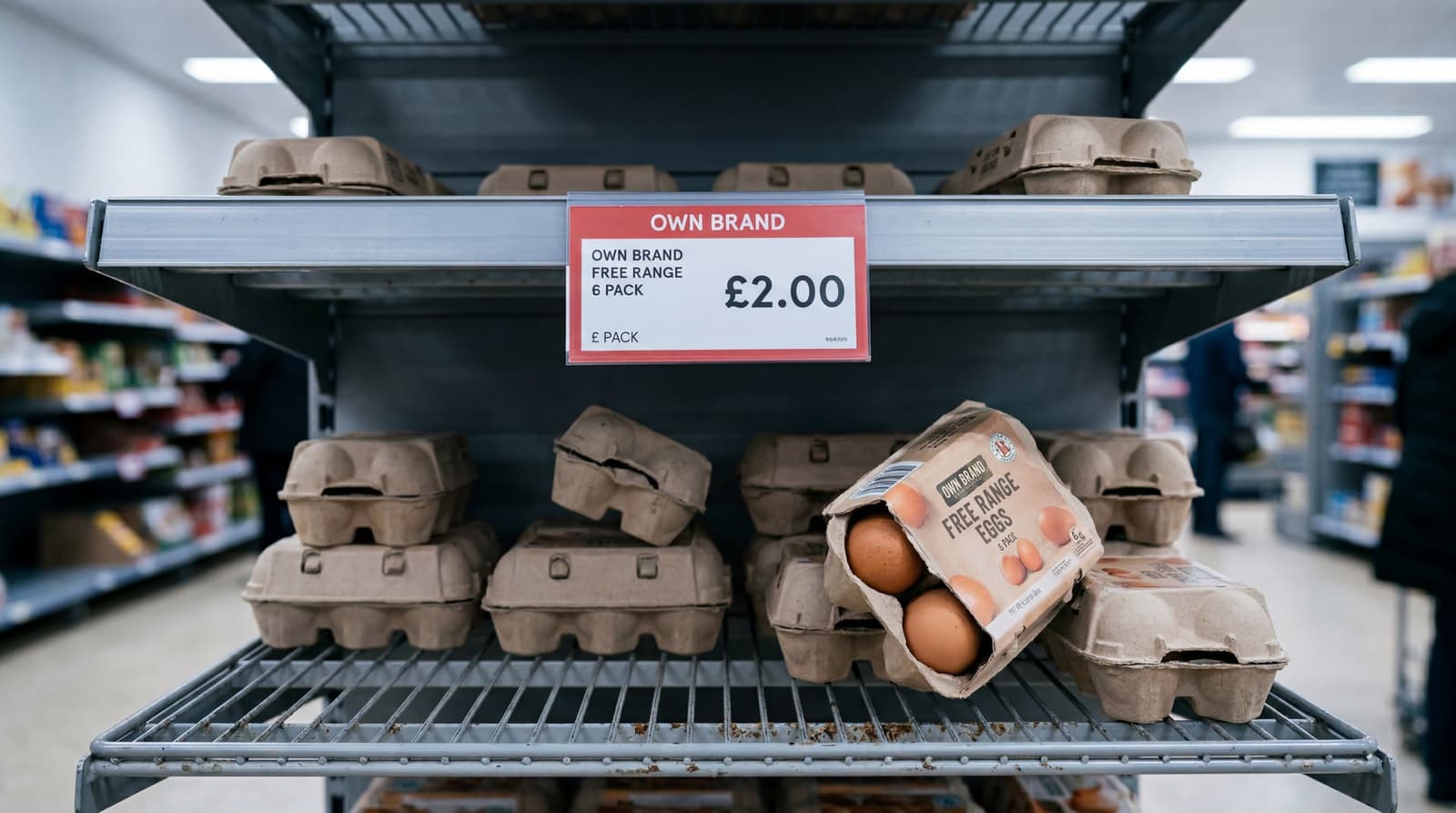
Six eggs used to cost £1. Here's why they're now £2.
UK egg prices have doubled in four years despite record production. The real story isn't greedflation, it's how prices move down much slower than they move up.
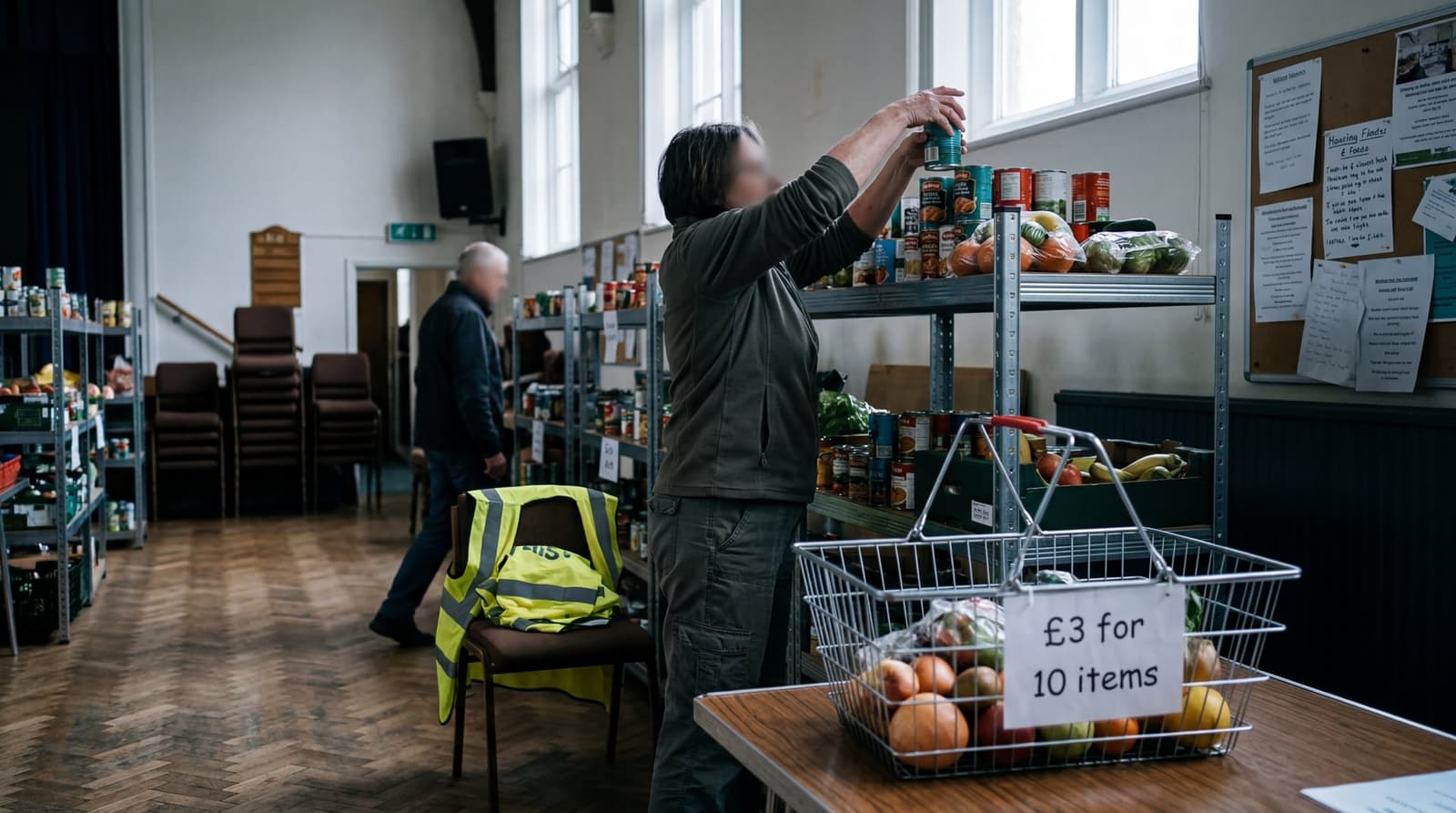
In Cambridge, a paycheck no longer keeps workers out of the food bank
The UK's most unequal city is now feeding employed residents through subsidised food clubs, raising questions about whether wages or housing will ever catch up.
UK spends £25 on youth benefits for every £1 on jobs help, Milburn finds
The former Labour health secretary's interim NEET review lands on a government still bruised by last summer's welfare rebellion, and questions whether spending more on job schemes can fix a crisis now driven by mental…

Why your ice cream costs $6.49: a coconut, cocoa and corporate crisis
A record-hot summer pushed American ice cream prices to all-time highs. The deeper story runs through Philippine biodiesel mandates, West African droughts, and the breakup of the world's biggest ice cream company.
Keep Reading
Assyrian Christian Among 85,000 Prisoners Released in Iran Amid Coronavirus Pandemic

Northern Ireland's rarest rainforest gets a 100-year reboot in Tyrone

Four Jersey beaches flunk bacteria tests as island bakes in record May heat

Bionic arms for five-year-olds, a third thumb, and the 90% who get nothing
Frasers rebrands Castleford outlet 'Leeds'. The real story is a credit product.